What Smart Lock Features Matter Most for Residential Use?
The best smart lock features are the ones you will use every day. When evaluating options, focus on these core capabilities:
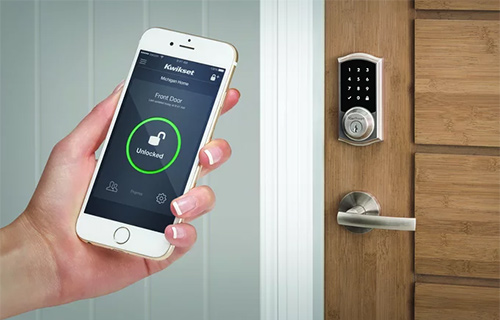
- Remote locking and unlocking through a mobile app
- Access code management for family, housekeepers, or contractors
- Activity logs that record each entry event with a timestamp
- Auto-lock that secures the door after a set interval
- Low-battery alerts and a physical key override as a backup
Connectivity options are also worth comparing. Wi-Fi locks connect directly to your home network and allow remote access without a separate hub. Z-Wave and Zigbee locks require a compatible hub but often integrate more smoothly with broader smart home platforms and security systems.
How Does Smart Lock Integration Work With a Home Security System?
A smart lock becomes significantly more useful when it communicates with the rest of your home security system. Locking or unlocking the door can trigger other actions, such as arming the alarm, turning on lights, or adjusting the thermostat. This kind of coordination is what separates a connected system from a collection of separate devices. We design residential security systems around each home’s layout, entry points, and daily routines, and smart lock integration is part of that planning process.
Integration also extends to professional monitoring. A smart lock that is part of the same system can be monitored alongside door and window sensors, so unauthorized attempts to open or force a door are captured as part of the overall alarm event. For homeowners who want to manage everything from one place, smart home automation platforms bring locks, cameras, lights, and sensors together in a single mobile interface.
What Should You Know About Smart Lock Compatibility Before Buying?
Compatibility is one of the most common areas where smart lock evaluations go wrong. Before purchasing a device, confirm it works with the automation platform or security system you already have or plan to install. A lock that cannot communicate with your alarm panel or camera system limits the value you get from it.
Door hardware compatibility is equally important. Smart locks are designed to replace or augment deadbolts, and the lock you choose needs to fit the existing cutout and bore pattern on the door. Some locks also require a specific door thickness or backset measurement. A professional assessment before installation prevents the frustration of purchasing a lock that does not fit. If your home has multiple entry points, our access control systems are designed with coordinated, multi-point access in mind so credential management stays simple.
Are Smart Locks Secure Enough for Residential Use?
Smart locks from reputable manufacturers use encryption to protect wireless communication between the lock and the app or hub. That said, the physical security of the door, frame, and hinges matters just as much as the electronic components. A strong door with a well-installed deadbolt combined with a smart credential layer is a meaningful improvement over a conventional lock that relies entirely on a physical key.
Account security also plays a role. We recommend these practices when setting up any smart lock:
- Use a strong, unique password for your smart home app
- Enable two-factor authentication wherever the platform supports it
- Choose a manufacturer with a track record of providing firmware updates
When you work with a professional installer, these considerations become part of the equipment selection and configuration conversation rather than something you navigate after the fact.
How Smart Locks Fit Into a Layered Residential Security Plan
A smart lock contributes access management and entry awareness, but it works best alongside video surveillance, entry sensors, motion detectors, and professional monitoring. Residential video surveillance at a main entry gives you a visual record of who is at the door before they use a credential, and residential alarm systems add a detection and notification layer if unauthorized entry is attempted.
A professional security assessment reviews all entry points, including side doors, garage access points, and back entries, to help you understand where a smart lock adds value and how the devices you choose can work together rather than independently.
Getting a Smart Lock Evaluation Right in San Diego
We have been serving San Diego County since 2009, and we approach every residential project by reviewing the home’s layout, entry points, existing equipment, and the homeowner’s daily habits before recommending specific devices or configurations. Our customers consistently describe the experience as patient and thorough, with equipment selected to fit real needs and budget rather than a generic package. That approach carries through from the initial evaluation to installation, testing, and training so you feel confident using the system from day one.
If you are ready to evaluate smart lock features for your San Diego home or want to understand how a smart lock fits into a broader security system, contact us today to schedule a free consultation or on-site evaluation.