
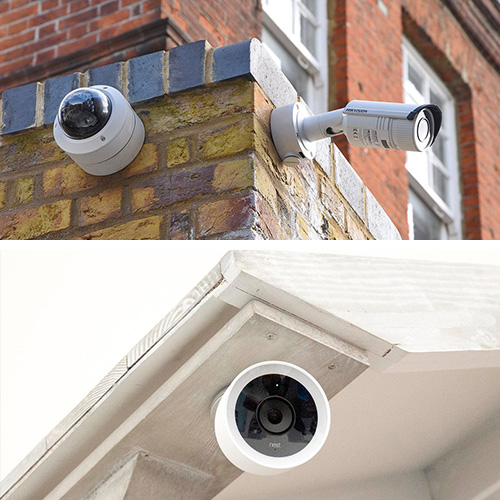
What Types of Cameras Are Used in a Professional Security Camera Setup?
A well-designed system uses the right camera for each location rather than the same model everywhere. Here are the main types we work with:
- Fixed cameras for entry points, cash registers, and hallways where coverage needs to stay focused on one area
- PTZ (pan-tilt-zoom) cameras for large open spaces like parking lots where a single fixed lens would leave gaps
- Indoor cameras for reception areas, stockrooms, and common spaces
- Weatherproof outdoor cameras built to handle Carlsbad’s coastal humidity, marine layer, and direct sun
Night vision capability matters for any exterior installation. Cameras with infrared illumination capture clear footage in low light without relying on exterior lighting. IP cameras transmit video over a network and allow remote viewing from a phone or computer, which is practical for property owners who are not always on site. Our commercial video surveillance and residential video surveillance services are built around selecting the right camera for each position.
How Do You Determine the Right Number of Cameras?
Camera count is determined by the property layout, not by a standard package. A professional assessment identifies every entry point, including doors, gates, garage access, and loading areas, along with high-value interior areas and exterior zones where visitors or delivery vehicles move through.
For residential properties, a typical starting point includes front and back entry doors, the driveway or garage, and any side gates. For commercial properties, coverage extends to the storefront entrance, parking area, interior workspaces, and secondary access points. The goal is overlapping coverage at critical zones so a single camera failure does not create a blind spot.
Where Should Video Footage Be Stored?
Storage comes down to three options: on-site using a DVR or NVR, cloud-based, or a combination of both. Local storage works well when internet connectivity is limited or when high-resolution video needs to be saved in large volumes without ongoing subscription costs. The tradeoff is that local equipment can be stolen or damaged in the same event that triggered the cameras.
Cloud storage sends footage offsite in real time, so it remains accessible even if on-site equipment is removed. A hybrid setup provides redundancy and flexible access. The right choice depends on how long footage needs to be retained, how much video is generated daily, and what level of remote access the property owner wants. We walk through these options during the design process so the storage solution matches the actual needs of the property.
How Does a Camera System Work With Alarms and Access Control?
A camera system delivers more value when connected to other security tools. When an alarm is triggered, an integrated video system can automatically pull up the relevant camera feed so a monitoring center can visually confirm whether the alert is genuine. This is called video verification, and it gives monitoring personnel better information before contacting emergency responders.
Cameras paired with access control systems allow entry logs and video footage to be reviewed together. If an access credential is used at an unusual time, the corresponding video clip from that door camera is available alongside the log entry. For apartment buildings, office parks, and commercial properties in Carlsbad, this combination creates a much clearer picture of who entered and when.
What Should You Know About Camera Placement and Coverage Quality?
Where a camera is positioned affects everything: the angle of view, facial recognition quality at entry points, and whether glare or direct sunlight washes out the image. Key placement considerations include:
- Mounting height that captures usable detail without being easy to obstruct or tamper with
- Lighting direction so subjects are lit from the front rather than backlit by bright windows or exterior glare
- Overlap between adjacent cameras to eliminate blind spots at critical zones
- Seasonal landscaping that may grow into a camera’s field of view over time
For Carlsbad homeowners and business operators considering their first camera setup or looking to upgrade an existing system, a site-specific assessment is the most reliable way to identify the right positions before any equipment is purchased. Our Carlsbad security systems service includes on-site planning as part of the design process.
Getting Started With a Security Camera Setup in Carlsbad
A well-designed system starts with the right questions: What are the entry points? Who needs to be identified on camera? How long should footage be kept? Does the system need to connect with an alarm, access control, or monitoring service? Answering those questions before selecting equipment leads to a system that performs well over time.
La Jolla Security Systems has been designing and installing camera systems for homes and businesses across San Diego County since 2009. We handle everything from initial assessment and equipment selection to professional installation, configuration, and user training. If you are ready to plan a security camera setup for your Carlsbad, CA property, contact us today to schedule a consultation.